A new era for Khombole: the Community Innovation Hub signs partnership agreements with the Women’s Cooperative and the Khombole Mayor’s Office

“The challenge in Khombole isn’t a lack of resources, but rather how to make the most of our land and water.”

These words sum it all up. They capture not only the spirit of the day, but also the founding principle behind AgriFemmes; the communities of Khombole don’t need handouts; they need systems capable of harnessing the resources they already have.

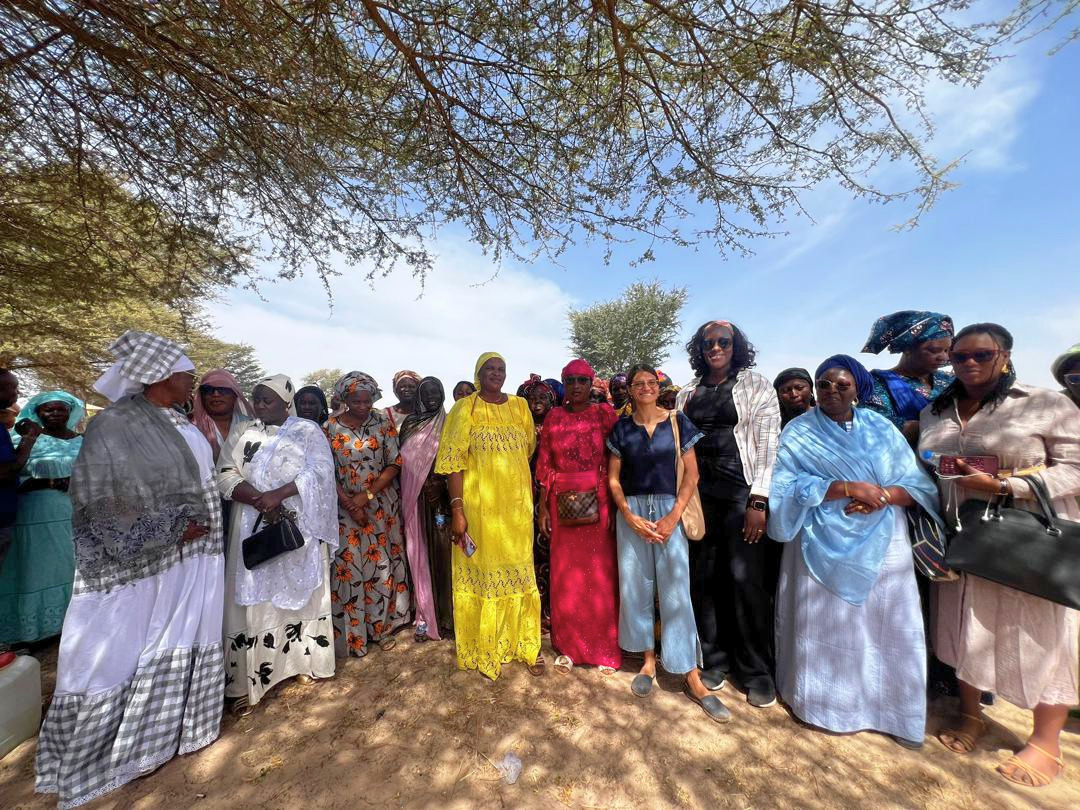
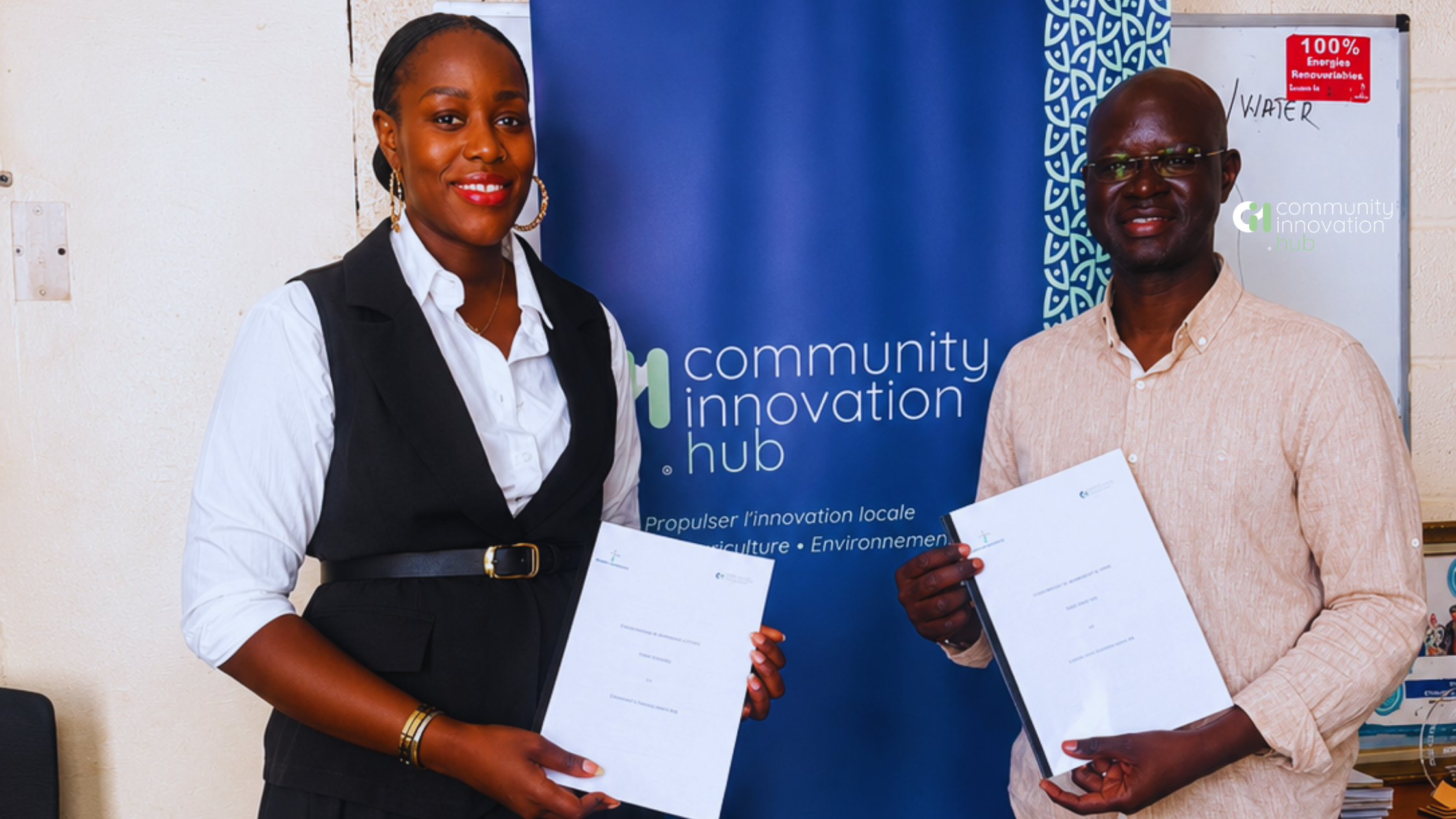
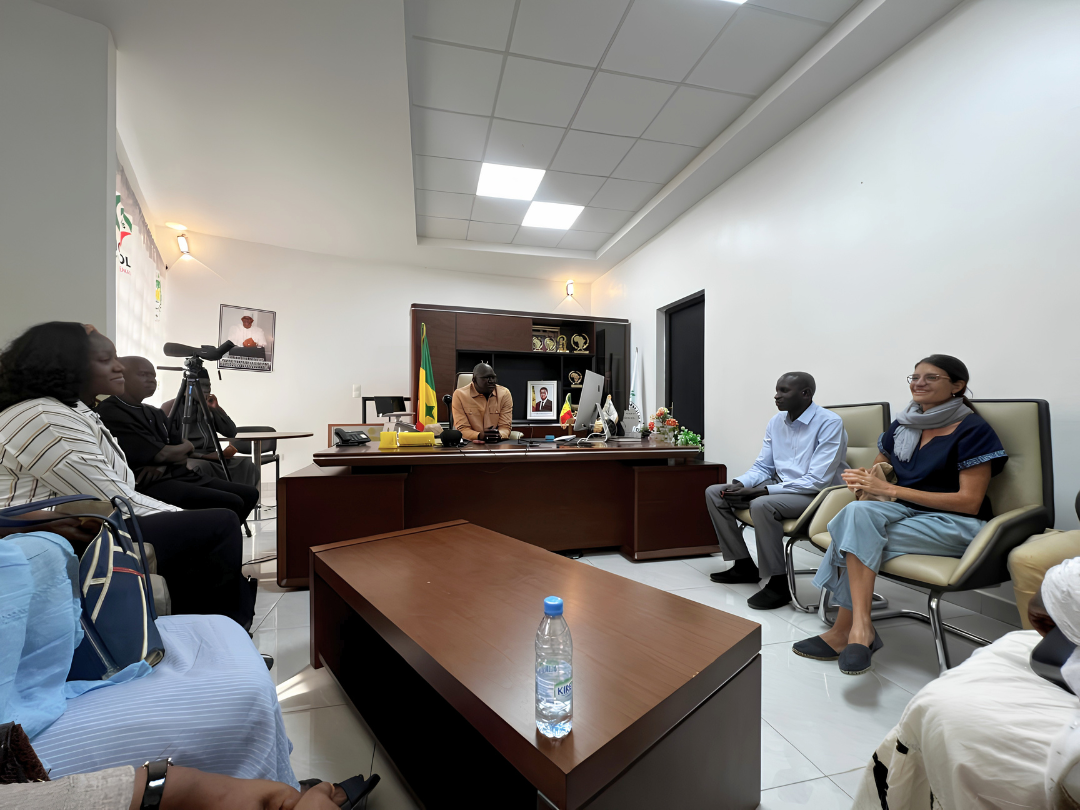
In April, we spent a day in Khombole for a milestone we had been anticipating for months. The Community Innovation Hub formalized its partnership with the Khombole Women’s Cooperative and the Khombole Mayor by signing memorandums of understanding that mark the beginning of a new phase of the AgriFemmes program on the ground.

Scope of the agreement and importance

The signing of these agreements is not merely an administrative formality; it is a public commitment: a commitment by three institutions that have come together to work toward a common goal, namely transforming Khombole’s agricultural potential into a sustainable economic success driven by women.

For the Community Innovation Hub, this formalization reflects our deep conviction that sustainable development must be rooted in local ownership. A program without institutional roots is merely an activity. These agreements ensure that what we are building in Khombole belongs to Khombole.

For the Mayor of Khombole, Mr. Magueye Boye, this is a strong signal that municipal leadership is ready to invest its authority and its land in support of women farmers, who have long been the backbone of local food production.

For the women’s cooperative, it is recognition that their leadership, their knowledge, and their work are not merely contributions to a project. They are the project.
A day in the field

The signing ceremony was just one moment in a day that was both strategic and deeply rooted in the realities on the ground.

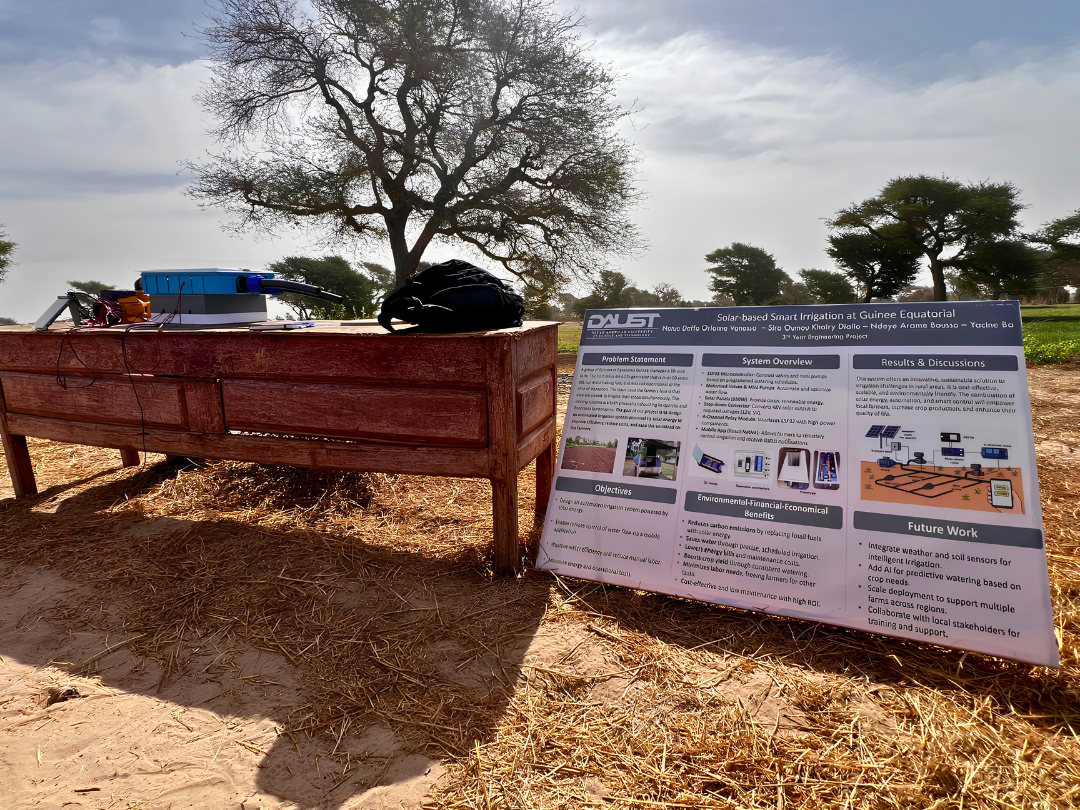
We visited the boreholes and solar irrigation systems that form the technical backbone of the pilot. These infrastructures were designed by students from the Dakar American University of Science and Technology (DAUST), whose ingenuity has provided the program with some of its most promising tools. To see young African engineers designing solutions for Senegalese women farmers: this is exactly the ecosystem that the Community Innovation Hub is here to develop.

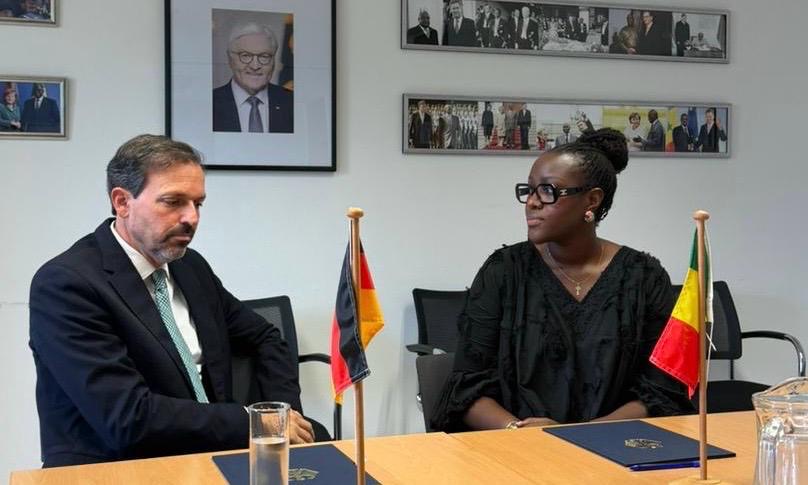
We also hosted a delegation from the German Embassy, who came to visit the field and witness the leadership of the women in the cooperative.

And what they saw was striking. The women of the cooperative spoke about their role in land management, decision-making, and guiding the work. This is significant; in too many development projects, women are merely beneficiaries. In AgriFemmes, they are the architects.

The program: What AgriFemmes is building in Khombole

The Khombole pilot project is at the core of AgriFemmes’ vision for climate-resilient, women-led agriculture. On 20 hectares of communal land, the program focuses on three closely related priorities:

Infrastructure and Technology: Rehabilitate and optimize existing drip and solar irrigation systems, and integrate the Smart Irrigation System (SIS), an AI-powered tool that allows female farmers to monitor soil moisture and irrigate their crops remotely from their phones. 

Economic Transformation: The goal is structural change, shifting from subsistence farming to commercial agriculture. This means higher yields, market access, and predictable, growing incomes. The program is explicitly designed “by women, for women”, meaning every economic gain benefits the cooperative and the households within it.

Climate resilience: Khombole faces the same pressures as the rest of the Sahel in unpredictable rainfall, heat stress, and soil degradation. AgriFemmes incorporates strategies for the dry season, including the use of climate-adapted seeds and innovative crops capable of withstanding the increasing challenges that climate change is imposing on the region.
Looking Ahead

The signing of the Khombole agreements marks a beginning, not an end. These agreements set the framework; what matters now is implementation: turning the commitments made on paper into reality on the ground, season after season.

The Community Innovation Hub will continue to work alongside the cooperative and the city council to implement the program, deploy the technology, and build the capacity that will enable this model to function and grow independently.

Because, ultimately, that is AgriFemmes’ goal. Not to create dependency. Not to set up a project whose existence depends on us. But a system that the women of Khombole can take ownership of, lead, and pass on.

To learn more about AgriFemmes, click here.
 

Share on:

Bocar Traoré

Bocar Traoré

Strategic Partnerships and Development Intern

Bocar TRAORE is a Strategic Partnership and Development Intern at Community Innovation Hub, where he supports the organization's resource mobilization, project design, and partner engagement strategies.

Working closely alongside the Strategic Partnerships and Development Officer, Bocar assists in identifying strategic funding opportunities, conducting donor research, and supporting the development of concept notes and proposals across health, climate resilience, agriculture, education, and inclusive governance.

Bocar Traoré

Bocar Traoré

Stagiaire en Partenariats Stratégiques et Développement

Bocar TRAORE est Stagiaire en Partenariats Stratégiques et Développement au Community Innovation Hub, où il appuie la mobilisation des ressources, la conception de projets et les stratégies d'engagement des partenaires de l'organisation.

Travaillant en étroite collaboration avec la Chargée des Partenariats Stratégiques et du Développement, Bocar contribue à l'identification d'opportunités de financement stratégiques, à la recherche de bailleurs de fonds et à l'élaboration de notes de cadrage et de propositions de projets dans les domaines de la santé, de la résilience climatique, de l'agriculture, de l'éducation et de la gouvernance inclusive.

Nancy Akpo

Nancy Akpo

Communication Intern

Nancy AKPO is a Communication & Development Intern at the Community Innovation Hub, where she supports content creation, digital presence, and funding opportunity research across the organization's programs.

Her work combines digital communication and development strategy. She contributes to building CIH's editorial presence across platforms, producing content that makes the organization's impact visible and accessible, while also supporting the identification of funding opportunities aligned with CIH's mission.

El Hadji Malick Niang

El Hadji Malick Niang

Stagiaire Technologies & Innovation

El Hadji Malick NIANG est stagiaire développeur en Technologies et Innovation au Community Innovation Hub, où il appuie la conception, le prototypage et l'exploration technique d'outils numériques destinés aux programmes à impact communautaire.

Son travail de stage combine développement logiciel, automatisation, structuration de données et recherche appliquée. Il contribue à la création et au test de solutions pratiques comme des tableaux de bord, des scripts, des prototypes techniques et des modèles d'analyse, tout en aidant à évaluer comment les outils numériques peuvent soutenir des domaines comme la santé communautaire, l'agriculture, l'inclusion et le développement local.

Fatoumata Bakhoum Samb

Fatoumata Bakhoum Samb

Administrative and Financial Manager

Fatoumata BAKHOUM SAMB is the Administrative and Financial Manager (RAF) at Community Innovation Hub, where she leads the organization's financial stewardship, administrative operations, budget management, and internal compliance systems.

With more than a decade of experience in administrative, accounting, and financial management, she has worked across corporate consulting, private enterprise, renewable energy, and social innovation. Her work is rooted in establishing transparent financial governance, driving operational efficiency, and building rigorous management frameworks that support sustainable development.

At CIH, Fatoumata oversees financial planning, treasury management, internal audits, and administrative execution in support of community projects focused on inclusion, education, and innovation. Drawing from her background in structuring financial systems for energy transition initiatives at Coseer Energy and managing corporate compliance at Fideo Holding, she ensures that the organization maintains accountable, high-performing financial practices.

Fatoumata holds a degree in Accounting and Finance from ESUP Dakar and possesses technical expertise in modern financial software, including Sage Saari 100, Odoo, and QuickBooks.

Outside of work, she enjoys spending quality time on family outings, traveling, and shopping in her free time.

Steve Charvet

Steve Charvet

Responsable Technologies et Innovations

Steve CHARVET est le Responsable Technologie et Innovation au Community Innovation Hub, où il pilote la stratégie numérique de l'organisation, supervise le développement des outils technologiques et sert d'interface principale entre les équipes techniques externes et le CIH sur l'ensemble des projets en cours.

Fort d'un parcours à la croisée de la technologie et du développement, il apporte son expertise dans les systèmes d'information géographique (SIG), l'intelligence artificielle appliquée et la conception d'outils numériques adaptés aux contextes à ressources limitées. Son travail repose sur un principe simple : mettre la technologie au service des personnes, et non l'inverse.

Au sein du CIH, Steve coordonne le déploiement de plateformes technologiques dans des domaines stratégiques tels que la santé communautaire, l'agriculture et l'équité de genre. Il gère les systèmes internes de suivi et de traçabilité des financements de l'organisation, tout en identifiant des opportunités de partenariats stratégiques pour développer et faire passer à l'échelle le portefeuille d'innovations du CIH.

Avant de rejoindre le secteur du développement, Steve a travaillé comme compositeur de musique en France à la fin des années 1990, lors de l'essor des technologies sonores numériques, une expérience qui a forgé sa conviction que les technologies les plus puissantes sont celles qui amplifient l'expression et le potentiel humains.

Steve est titulaire d'un DEUG en Langues, Littératures et Civilisations Étrangères (Anglais) de l'Université Jean Moulin (Lyon III) et d'un titre certifié en Communication Digitale et Management Marketing délivré par le CIFAP.

En dehors du travail, il continue de se passionner pour la musique, la création musicale et de passer du temps de qualité en famille.

Sylvia Dooper

Sylvia Dooper

Partnerships and Development Officer

Sylvia DOOPER is the Strategic Partnerships and Development Officer at Community Innovation Hub, where she works alongside the Executive Director to drive the organization's resource mobilization, project design, and strategic alliance building.

With a solid background in international development, diplomacy, governance, and partnership building, she has worked across issues ranging from local governance and higher education to global health, advocacy, and regional development. Her work is rooted in connecting people, ideas, and resources to champion locally led solutions and create sustainable, long-term impact through meaningful collaboration.

At CIH, Sylvia focuses on identifying and cultivating strategic partnerships, developing high-impact concept notes, and designing funding proposals across health, climate resilience, agriculture, education, and inclusive governance. Drawing from her background across diplomatic, multilateral, and advocacy organizations, including the Dutch Ministry of Foreign Affairs, the European Commission, VNG International, The ONE Campaign, and GDI Advisors, she builds robust networks to scale the Hub's reach.

Sylvia holds a Bachelor's degree in International Development Studies from Wageningen University in the Netherlands, a Master's degree in Middle Eastern Studies from Lund University in Sweden, and a Master's degree in International Relations and Diplomacy from Antwerp University in Belgium.

Outside of work, she is passionate about sports and thrives on challenges that require discipline and resilience, qualities she brings into her professional life.

Assiatou Kama Niang

Assiatou Kama Niang

Executive Director

Assiatou KAMA NIANG is the Co-Founder and Executive Director of Community Innovation Hub, where she leads the organization's strategic direction, partnerships, resource mobilization and program development across Africa.

With more than a decade of experience in public health, public policy, gender equity and community engagement, she has worked across research, policy analysis, partnership development and multi-country program management. Her work is rooted in translating evidence, technology and local knowledge into practical solutions that respond to community priorities.

At CIH, Assiatou provides strategic leadership for the organization's growth across health, climate resilience, agriculture, education and inclusive governance. She guides the development of CIH's program portfolio, cultivates institutional and technical partnerships, leads resource mobilization efforts and ensures that the organization's work remains grounded in locally led, evidence-informed innovation.

Assiatou holds a Bachelor's degree in Exercise and Sport Science from Oregon State University, a Master's degree in Health Promotion Management, and a Graduate Certificate in Public Policy Analysis from American University in Washington, D.C.

Outside of work, she enjoys family time, good food and making space for rest and relaxation, especially well-deserved spa days.