Training today to act tomorrow: the partnership between CIH x ENDA Energie on the ARRICE project

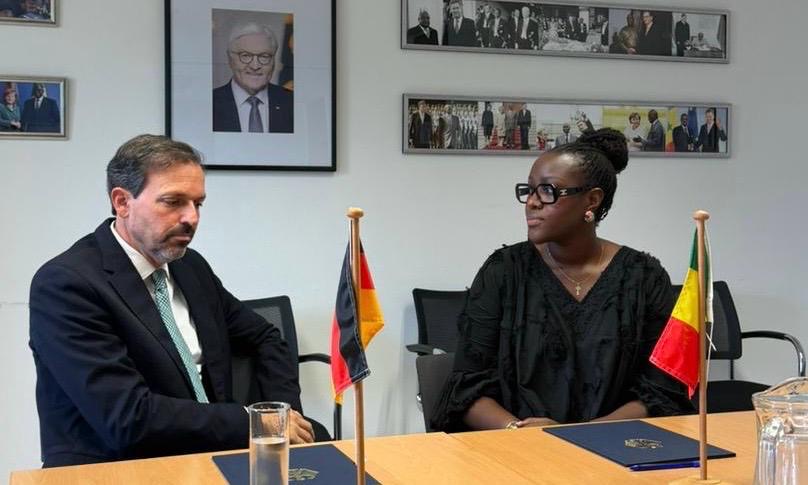
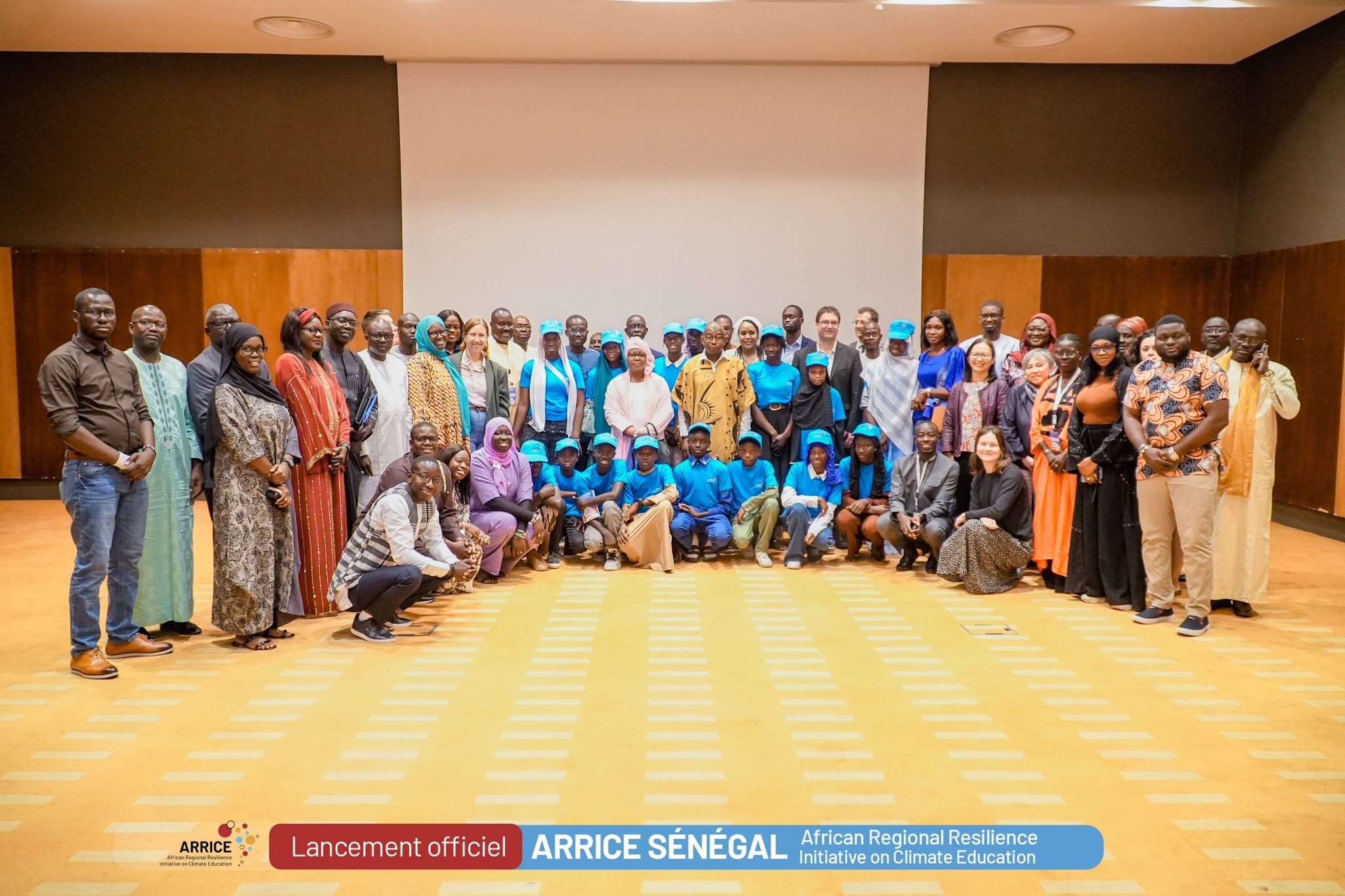
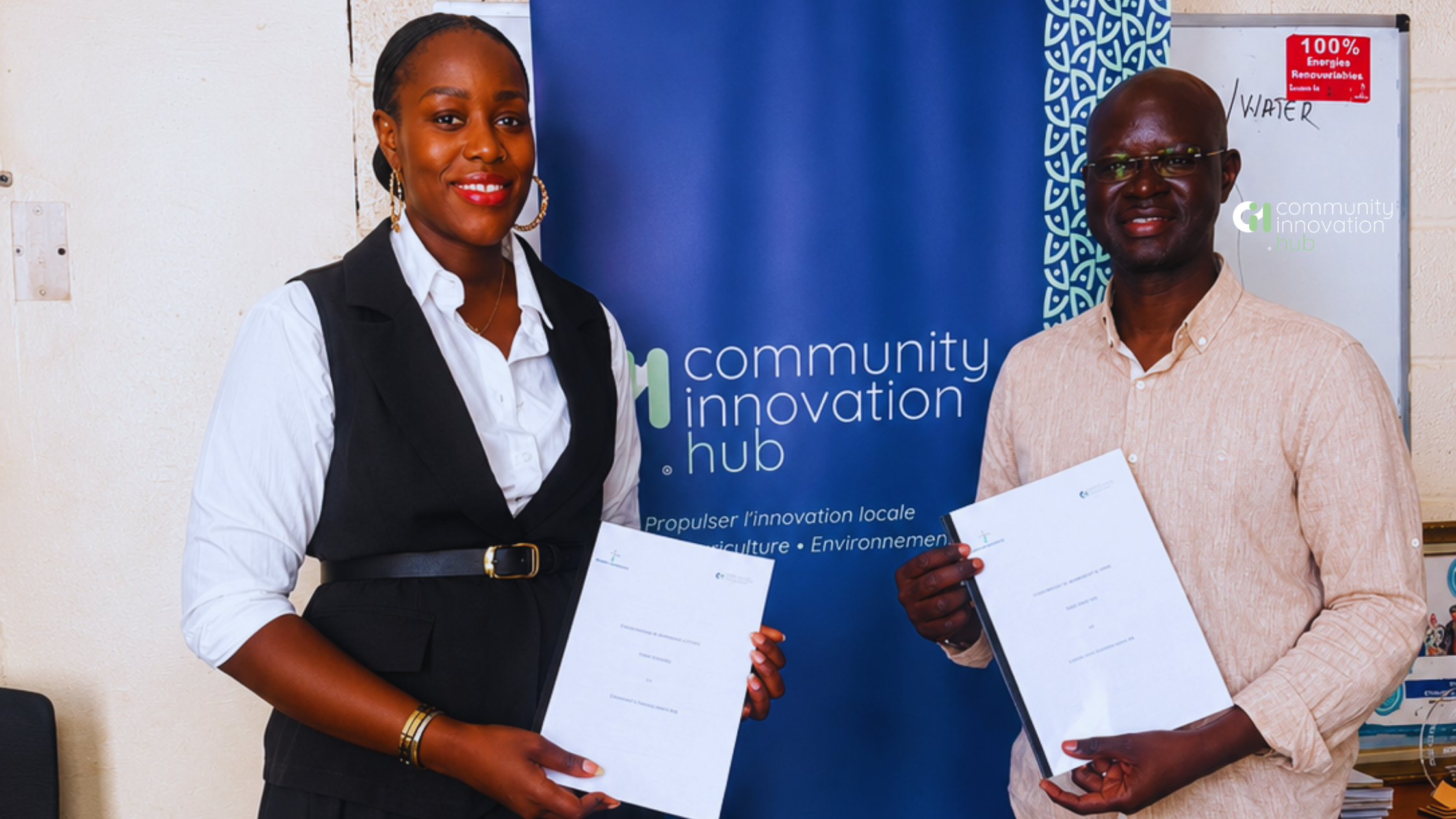
The Community Innovation Hub (CIH) and ENDA Energie officially launched, on June 23, 2026, their partnership as part of the ARRICE project, Africa Regional Resilience Initiative on Climate Education, a four-year initiative (2024–2028) coordinated by the Office for Climate Education (OCE/UNESCO), active in Senegal, Kenya, and Mauritius. This memorandum of understanding marks far more than an administrative formality. It reflects a clear positioning: CIH will not join this project as a technical service provider at the end of the chain, but as a co-builder, from the earliest stages of content design.

A project born from a continental observation

Africa is one of the continents most exposed to the effects of climate change, even though it contributes only marginally to global emissions. Faced with this reality, ARRICE is built on a wager: that schools can become engines of climate resilience, provided the education offered is rooted in local realities, delivered by trained and well equipped teachers, and designed to move students from knowledge to concrete action.

In Senegal, local implementation of the project has been entrusted to ENDA Energie, an NGO that is a member of the international Enda Tiers Monde network, whose expertise in climate resilience, policy advocacy, and community development makes it a central partner in the initiative. The project is now entering its phase of content creation and educational resource development, through working groups in which CIH will fully participate.
 

Starting from the Senegalese context, not an imported model

During preparatory discussions between the two organizations’ teams, one point quickly became clear: the existing educational resources from the ALEC project led by OCE in Latin America cannot simply be transposed to Senegal as they are. The Minister of National Education himself highlighted this. A superficial adaptation will not be enough. The work must start from the country’s cultural and linguistic realities, its school cycles, age groups, and students’ living contexts.

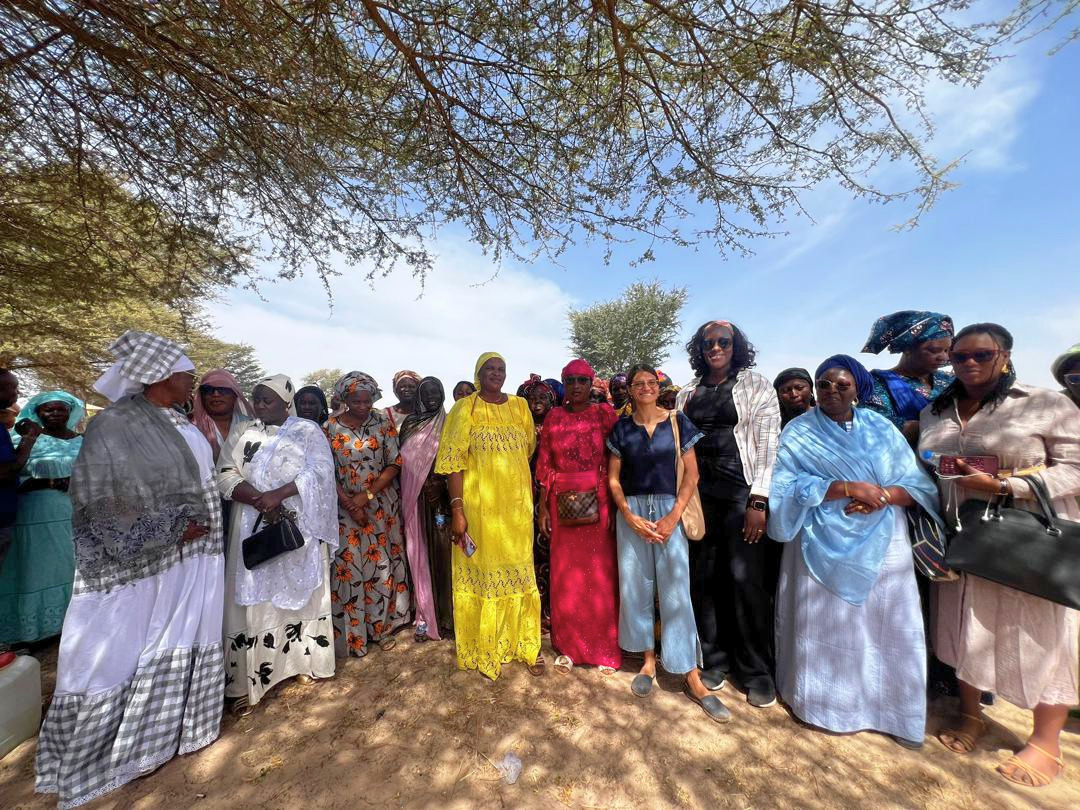
The project targets five regions, namely Dakar, Saint-Louis, Kédougou, Fatick, and Ziguinchor, with twenty five pilot schools spanning primary through secondary levels. The initial phase focuses on urban areas for logistical reasons, but the work will also extend to rural areas, including schools without electricity or internet access. This choice imposes a non negotiable constraint: offline content will be essential.

A digital strategy designed for local realities

CIH’s contribution to the project will not be limited to digitizing existing resources. The ambition is to produce interactive, engaging tools, designed from the outset for two distinct contexts. An online version will first be developed and refined during the pilot phase in urban areas. It will then be adapted into offline formats for subsequent phases, in rural areas where connectivity remains limited or nonexistent.

This progressive approach reflects a requirement CIH raised from the very first meetings: not to treat digitalization as a final step, but as a component integrated from the start of content design, in service of its relevance and accessibility.

From knowledge to action: student agency at the center

What sets ARRICE’s ambition apart from a conventional environmental education project is the emphasis placed on student agency. The goal is not only to convey knowledge about climate change. It is to support the shift from understanding to concrete action: school projects, environmental clubs, community initiatives led by young people themselves.

The digital tools CIH will help develop must support this shift, through playful mechanisms, systems for tracking actions carried out by students, and formats that turn learners into actors. This is the logic behind the vision championed by ENDA Energie and shared by CIH: schools as spaces for transformation, not just transmission.
What this partnership means for us

For the Community Innovation Hub, joining ARRICE means extending a conviction: innovation only has value if it responds to real needs, is rooted in local contexts, and strengthens the capacities of the people who are its first beneficiaries. This partnership gives CIH the opportunity to help build a climate education model adapted to Senegal, one that could potentially be replicated across West Africa as the project expands.

Through this collaboration, CIH reaffirms its commitment to connecting digital innovation, local knowledge, and systemic impact, in service of communities and institutions better equipped to face tomorrow’s challenges.
Share on:

Bocar Traoré

Bocar Traoré

Strategic Partnerships and Development Intern

Bocar TRAORE is a Strategic Partnership and Development Intern at Community Innovation Hub, where he supports the organization's resource mobilization, project design, and partner engagement strategies.

Working closely alongside the Strategic Partnerships and Development Officer, Bocar assists in identifying strategic funding opportunities, conducting donor research, and supporting the development of concept notes and proposals across health, climate resilience, agriculture, education, and inclusive governance.

Bocar Traoré

Bocar Traoré

Stagiaire en Partenariats Stratégiques et Développement

Bocar TRAORE est Stagiaire en Partenariats Stratégiques et Développement au Community Innovation Hub, où il appuie la mobilisation des ressources, la conception de projets et les stratégies d'engagement des partenaires de l'organisation.

Travaillant en étroite collaboration avec la Chargée des Partenariats Stratégiques et du Développement, Bocar contribue à l'identification d'opportunités de financement stratégiques, à la recherche de bailleurs de fonds et à l'élaboration de notes de cadrage et de propositions de projets dans les domaines de la santé, de la résilience climatique, de l'agriculture, de l'éducation et de la gouvernance inclusive.

Nancy Akpo

Nancy Akpo

Communication Intern

Nancy AKPO is a Communication & Development Intern at the Community Innovation Hub, where she supports content creation, digital presence, and funding opportunity research across the organization's programs.

Her work combines digital communication and development strategy. She contributes to building CIH's editorial presence across platforms, producing content that makes the organization's impact visible and accessible, while also supporting the identification of funding opportunities aligned with CIH's mission.

El Hadji Malick Niang

El Hadji Malick Niang

Stagiaire Technologies & Innovation

El Hadji Malick NIANG est stagiaire développeur en Technologies et Innovation au Community Innovation Hub, où il appuie la conception, le prototypage et l'exploration technique d'outils numériques destinés aux programmes à impact communautaire.

Son travail de stage combine développement logiciel, automatisation, structuration de données et recherche appliquée. Il contribue à la création et au test de solutions pratiques comme des tableaux de bord, des scripts, des prototypes techniques et des modèles d'analyse, tout en aidant à évaluer comment les outils numériques peuvent soutenir des domaines comme la santé communautaire, l'agriculture, l'inclusion et le développement local.

Fatoumata Bakhoum Samb

Fatoumata Bakhoum Samb

Administrative and Financial Manager

Fatoumata BAKHOUM SAMB is the Administrative and Financial Manager (RAF) at Community Innovation Hub, where she leads the organization's financial stewardship, administrative operations, budget management, and internal compliance systems.

With more than a decade of experience in administrative, accounting, and financial management, she has worked across corporate consulting, private enterprise, renewable energy, and social innovation. Her work is rooted in establishing transparent financial governance, driving operational efficiency, and building rigorous management frameworks that support sustainable development.

At CIH, Fatoumata oversees financial planning, treasury management, internal audits, and administrative execution in support of community projects focused on inclusion, education, and innovation. Drawing from her background in structuring financial systems for energy transition initiatives at Coseer Energy and managing corporate compliance at Fideo Holding, she ensures that the organization maintains accountable, high-performing financial practices.

Fatoumata holds a degree in Accounting and Finance from ESUP Dakar and possesses technical expertise in modern financial software, including Sage Saari 100, Odoo, and QuickBooks.

Outside of work, she enjoys spending quality time on family outings, traveling, and shopping in her free time.

Steve Charvet

Steve Charvet

Responsable Technologies et Innovations

Steve CHARVET est le Responsable Technologie et Innovation au Community Innovation Hub, où il pilote la stratégie numérique de l'organisation, supervise le développement des outils technologiques et sert d'interface principale entre les équipes techniques externes et le CIH sur l'ensemble des projets en cours.

Fort d'un parcours à la croisée de la technologie et du développement, il apporte son expertise dans les systèmes d'information géographique (SIG), l'intelligence artificielle appliquée et la conception d'outils numériques adaptés aux contextes à ressources limitées. Son travail repose sur un principe simple : mettre la technologie au service des personnes, et non l'inverse.

Au sein du CIH, Steve coordonne le déploiement de plateformes technologiques dans des domaines stratégiques tels que la santé communautaire, l'agriculture et l'équité de genre. Il gère les systèmes internes de suivi et de traçabilité des financements de l'organisation, tout en identifiant des opportunités de partenariats stratégiques pour développer et faire passer à l'échelle le portefeuille d'innovations du CIH.

Avant de rejoindre le secteur du développement, Steve a travaillé comme compositeur de musique en France à la fin des années 1990, lors de l'essor des technologies sonores numériques, une expérience qui a forgé sa conviction que les technologies les plus puissantes sont celles qui amplifient l'expression et le potentiel humains.

Steve est titulaire d'un DEUG en Langues, Littératures et Civilisations Étrangères (Anglais) de l'Université Jean Moulin (Lyon III) et d'un titre certifié en Communication Digitale et Management Marketing délivré par le CIFAP.

En dehors du travail, il continue de se passionner pour la musique, la création musicale et de passer du temps de qualité en famille.

Sylvia Dooper

Sylvia Dooper

Partnerships and Development Officer

Sylvia DOOPER is the Strategic Partnerships and Development Officer at Community Innovation Hub, where she works alongside the Executive Director to drive the organization's resource mobilization, project design, and strategic alliance building.

With a solid background in international development, diplomacy, governance, and partnership building, she has worked across issues ranging from local governance and higher education to global health, advocacy, and regional development. Her work is rooted in connecting people, ideas, and resources to champion locally led solutions and create sustainable, long-term impact through meaningful collaboration.

At CIH, Sylvia focuses on identifying and cultivating strategic partnerships, developing high-impact concept notes, and designing funding proposals across health, climate resilience, agriculture, education, and inclusive governance. Drawing from her background across diplomatic, multilateral, and advocacy organizations, including the Dutch Ministry of Foreign Affairs, the European Commission, VNG International, The ONE Campaign, and GDI Advisors, she builds robust networks to scale the Hub's reach.

Sylvia holds a Bachelor's degree in International Development Studies from Wageningen University in the Netherlands, a Master's degree in Middle Eastern Studies from Lund University in Sweden, and a Master's degree in International Relations and Diplomacy from Antwerp University in Belgium.

Outside of work, she is passionate about sports and thrives on challenges that require discipline and resilience, qualities she brings into her professional life.

Assiatou Kama Niang

Assiatou Kama Niang

Executive Director

Assiatou KAMA NIANG is the Co-Founder and Executive Director of Community Innovation Hub, where she leads the organization's strategic direction, partnerships, resource mobilization and program development across Africa.

With more than a decade of experience in public health, public policy, gender equity and community engagement, she has worked across research, policy analysis, partnership development and multi-country program management. Her work is rooted in translating evidence, technology and local knowledge into practical solutions that respond to community priorities.

At CIH, Assiatou provides strategic leadership for the organization's growth across health, climate resilience, agriculture, education and inclusive governance. She guides the development of CIH's program portfolio, cultivates institutional and technical partnerships, leads resource mobilization efforts and ensures that the organization's work remains grounded in locally led, evidence-informed innovation.

Assiatou holds a Bachelor's degree in Exercise and Sport Science from Oregon State University, a Master's degree in Health Promotion Management, and a Graduate Certificate in Public Policy Analysis from American University in Washington, D.C.

Outside of work, she enjoys family time, good food and making space for rest and relaxation, especially well-deserved spa days.